


Calm, Experienced Birth Doula Support for Whatever Your Birth Brings
Personalized, Christ-centered birth support for Vancouver, WA & Portland, OR families
You don't have to know exactly how your birth will unfold.
You need people beside you who will help you prepare well, understand your options, support your partner, and remain steady when the unexpected happens.
I'm Rachel Gathright, a birth doula serving families throughout Vancouver, Washington, Portland, Oregon, and surrounding communities.
Serving families since 2021 • Limited monthly availability
Your birth isn't just another date on my calendar.
I intentionally accept fewer birth clients so I have more to give each one.
More time to prepare.
More room for questions.
More flexibility when labor begins.
More individualized support when plans change.
Even in a large family, you may experience birth only a handful of times in your life, each one transforming who you are.
I believe that deserves more than a one-size-fits-all approach.
When I commit to your birth, I'm making room for your birth.
My own experiences with pregnancy, birth, motherhood, and loss helped lead me into birth work in 2021.
But 5 years of births have taught me something I couldn't have learned from my own experiences:
Being a good doula isn't about giving every woman the kind of support I would want.
It's learning what you need.
I've been in peaceful birth rooms and frightening ones.
Short births and births that lasted for days and have become legend in our home.
Hospitals, birth centers and homes.
I've watched plans unfold beautifully—and watched them change completely.
Some families need information.
Some need reassurance.
Some need quiet.
Some need laughter.
Some need movement.
Some need prayer.
And some need all of those things at different moments of the same birth.
No two families need exactly the same care.
That's why I keep my practice intentionally small and personal.

We don't wait until labor to start preparing for birth.
Some of the most valuable doula work happens before the first contraction.
I want to learn how you move, cope, process information, make decisions, experience fear, receive support, and envision your birth.
Because the better I know you before labor, the better I can support you when it matters.
BODY
Prepare physically.
We'll explore movement, positioning, areas of tension or discomfort, supportive stretches and strengthening exercises, and wellness and nutrition education that may help you feel more comfortable and prepared for labor.
We're not trying to engineer a perfect birth.
We're thoughtfully preparing the things we can influence while respecting the things we can't control.
MIND
Prepare emotionally.
Maybe you're excited.
Maybe you're anxious.
Maybe pregnancy after loss, previous trauma, a difficult birth, or simply the unknown has made this pregnancy more complicated emotionally than you expected.
You don't have to minimize any of that with me.
We'll make room for your fears as well as your hopes—and develop practical ways to help you feel informed, grounded and supported.
PARTNER
Prepare together.
Your partner knows you.
I know birth.
Those two kinds of knowledge work beautifully together.
I'll help your partner understand what may be happening, learn practical ways to comfort you, and feel confident participating instead of wondering what they're supposed to do.
Because good doula support doesn't replace the people you love. It helps all of you work better together.
And all of that preparation becomes especially valuable when birth stops following the plan.
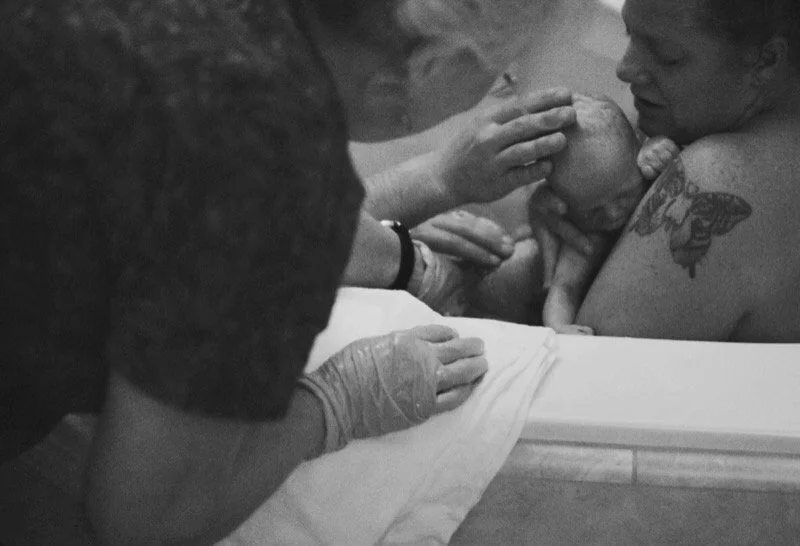
5 years have taught me to expect the unexpected.
I've supported beautifully straightforward physiological births.
I've also supported inductions, epidurals, VBACs, planned and unexpected cesareans, long labors, precipitous births, posterior and asynclitic babies, challenging labor patterns, home-to-hospital transfers, pregnancy after loss, previous birth trauma, and significant anxiety.
Birth doesn't always behave the way we expect it to.
Experience hasn't taught me how to control that.
It's taught me how not to be intimidated by it.
When circumstances change, I can stay grounded, look at what is happening now, help you understand the information in front of you, explore appropriate comfort and positioning strategies, and help you identify useful questions.
Other doulas have referred families to me when they felt a client would benefit from someone comfortable supporting anxiety, trauma, or challenging circumstances. Midwives, OB’s and other birth professionals have also taken time out to let me know how much they appreciated how I navigate the birth space and asked for my information to refer future families to me.
Knowing what to try matters.
But knowing how to work with everyone else in the room matters, too.
I'm for you without needing to be against them.
Your priorities at the center. Your whole care team working together.
Good advocacy doesn't require an adversarial birth room.
You can ask questions.
You can have strong preferences.
You can ask for more information.
You can decline something.
You can change your mind.
And you can participate actively in your care without treating your nurses, midwives, or physicians as the enemy.
My role is to keep you at the center of my attention while working respectfully and collaboratively with the people caring for you.
I'll help you understand information, identify questions you may want to ask, remember priorities we've discussed, and stay involved when plans change.
I don't make medical decisions for you.
I don't speak over you or allow anyone else to.
And I don't enter a hospital, birth center, or home birth expecting a fight.
I'm for you without needing to be against them.
That collaborative approach has earned the trust of medical professionals during some of the most challenging births I've attended.
And sometimes the biggest challenge in the room isn't medical at all.
Sometimes you need someone who isn't frightened by your fear.
Pregnancy and birth can hold seemingly contradictory things at the same time.
Excitement and anxiety.
Hope and grief.
Faith and fear.
Confidence and uncertainty.
I understand that personally.
I'm a mother of four—and I've also experienced four miscarriages.
I have a particular heart for families navigating anxiety, pregnancy after loss, previous birth trauma, or fear surrounding pregnancy and birth.
You don't need me to tell you to stop worrying.
You need someone willing to hear what you're afraid of, help you understand what you can prepare for, and remain grounded beside you when you don't feel grounded yourself.
Sometimes you just need someone who isn't frightened by your fear.

Faith and evidence belong in the same room.
My Christian faith shapes how I understand birth, motherhood and service. For families who desire faith-centered support, prayer, Scripture and spiritual encouragement can naturally become part of our prenatal preparation and labor. But faith-centered care doesn't mean pretending difficult things aren't difficult.
And trusting God doesn't mean you shouldn't ask questions.
You can pray and prepare. You can trust and ask for evidence. You can have strong preferences and still change your mind. You can hope for one kind of birth and make thoughtful decisions when circumstances lead somewhere different. My role isn't to tell you what choices a Christian mother should make. It's to provide knowledgeable, compassionate support as you make the decisions that are right for you and your baby.

Support begins when you need support.
Sometimes early labor needs food, privacy and rest.
Sometimes reassurance is what you need most.
And sometimes position changes, hands-on comfort, a calmer environment, or working through fear and tension may be useful.
We'll stay in communication as labor develops and decide together when my physical presence would be helpful.
I'm not interested in simply showing up for the finish line.
I'm there to support the birth you're actually having.
And while you're living that birth, I can help preserve pieces of it, too.
While you're living the story, I'll help preserve it.
There are parts of your birth you'll never get to see.
The way your partner looked at you.
The hand on your back during a contraction.
The people quietly caring for you.
The room just before everything changed.
The expression on your face when you first saw your baby.
When circumstances allow, I photograph pieces of your labor and birth while I'm supporting you.
I'm your doula first.
Your physical and emotional support always takes priority over the camera.
But because I understand birth and can often anticipate the moments that matter, I can preserve parts of the story you and your partner were too busy living to notice.
Your birth matters while you're living it.
Your memories of it matter afterward.
Your birth is worth preparing for.
You don't need the perfect birth plan.
You don't have to be fearless.
And you don't need to predict every turn your birth might take.
You need good information.
People you trust.
Room to make decisions.
Support that adapts with you.
And someone who understands that while this may be one of many births happening that day—
it isn't just another birth to you.
It isn't just another birth to me, either.
Let's talk about the birth you're hoping for—and the parts you're worried about, too.
Birth Doula Support • Vancouver, WA • Portland, OR • Surrounding Communities